
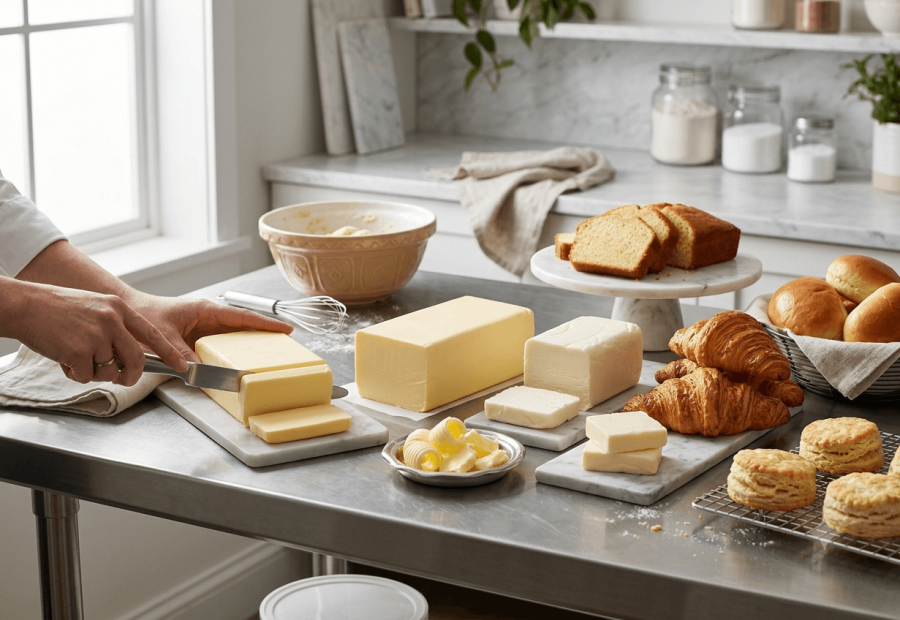
Bakery fats play an important role in commercial food production. From bread and buns to cakes, pastries, biscuits, and confectionery products, fats can influence texture, mouthfeel, appearance, processing characteristics, and overall product quality.
For medium and large-scale bakeries, selecting the right bakery fat is therefore an important part of product formulation and production planning. The right ingredient can support consistency across batches while helping manufacturers achieve the characteristics expected from their finished products.
Understanding how bakery fats work can help food manufacturers make more informed ingredient purchasing decisions.
What Are Bakery Fats?
Bakery fats are specialized food ingredients used in the formulation and production of various baked and confectionery products.
Depending on the specific fat and application, they may contribute to softness, structure, lubrication, richness, aeration, stability, or processing performance.
Commercial bakery fats can include shortening fats, margarine, butter fat alternatives, and other specialized fat systems designed for particular food manufacturing applications.
The choice of fat depends on the product being manufactured and the characteristics the producer wants to achieve.
The Role Of Fat In Bread And Bun Production
In bread and bun manufacturing, fats can contribute to dough handling and finished product characteristics.
They may help improve softness and mouthfeel while supporting the overall structure of the baked product.
For products such as burger buns and sandwich bread, manufacturers often look for a pleasant soft texture and good eating quality. Fat can be an important component in achieving these characteristics when used appropriately within the formulation.
Bakery Fat In Cake Manufacturing
Cake production is another area where fats play a significant role.
Fat can contribute to cake texture, richness, tenderness, and mouthfeel. In certain formulations, the interaction between fat, flour, sugar, eggs, emulsifiers, and other ingredients can influence the final volume and structure of the cake.
Commercial cake manufacturers therefore need to select ingredients that work effectively within their particular formulations and production methods.
The Importance Of Margarine
Margarine is widely used across bakery and food production applications. Depending on its formulation, it can be used in cakes, pastries, creams, fillings, biscuits, and other products.
Commercial manufacturers may select different types of margarine depending on the required processing characteristics and finished product requirements.
When choosing margarine, manufacturers should consider the application, processing method, storage conditions, flavour profile, and desired finished-product characteristics.
Shortening Fat For Commercial Applications
Shortening fats are used in a range of bakery applications where specific functional properties are required.
They can contribute to texture, mouthfeel, dough handling, and product structure. In commercial production, shortening may be used in products where consistency and repeatable processing characteristics are particularly important.
The exact performance depends on the formulation and the specific product.
Fat And Product Consistency
Large-scale food manufacturers need to produce products with consistent characteristics from batch to batch.
Ingredient variation can create differences in processing behaviour and finished-product quality. For this reason, commercial bakeries should carefully evaluate their fat ingredients and work with established suppliers.
Consistent raw materials can make it easier for production teams to maintain standardized manufacturing procedures.
Choosing The Right Bakery Fat
There is no single bakery fat that is ideal for every application.
A cake manufacturer may have different requirements from a bread manufacturer, while a pastry producer may require different characteristics again.
Before selecting a bakery fat, manufacturers should consider:
Product Type
Identify whether the ingredient will be used in bread, buns, cakes, biscuits, pastries, fillings, or another food application.
Processing Conditions
Mixing, temperature, handling, storage, and production equipment can influence ingredient performance.
Finished Product
Manufacturers should identify the desired texture, mouthfeel, structure, appearance, and other product characteristics.
Production Scale
Ingredients used in commercial manufacturing need to be practical for larger production volumes and repeatable processes.
Supplier Support
Working with an experienced ingredient supplier can help manufacturers understand available products and select suitable options for their applications.
Why Specialized Ingredients Matter
Modern commercial bakeries often need more than basic raw materials. Specialized bakery ingredients can help manufacturers address specific production requirements.
Hegadi International supplies a selected portfolio of bakery and food ingredients, including shortening fats, margarine, butter oil substitutes, yeast, whey powder, cocoa powder, bread and bun improvers, cake emulsifiers, and other ingredients.
These products are sourced from trusted international manufacturers and supplied to professional bakery and food producers in Sri Lanka.
Bakery Ingredients For Sri Lankan Manufacturers
Sri Lanka’s bakery and food manufacturing sector includes businesses ranging from large industrial bakeries to specialized confectionery manufacturers.
As manufacturers develop new products and improve existing formulations, the need for dependable bakery ingredients continues to grow.
Hegadi International supports this market by providing carefully selected ingredients for commercial production applications.
Conclusion
Bakery fats are much more than simple ingredients. They can influence texture, structure, mouthfeel, processing behaviour, and finished product characteristics across many bakery applications.
For commercial manufacturers, choosing the appropriate fat requires consideration of the product, formulation, processing environment, and production requirements.
By working with an experienced bakery ingredient supplier and selecting products suitable for their applications, manufacturers can build more consistent and efficient production processes.